

Blepharoplasty
WHAT IS COSMETIC & MEDICAL EYELID SURGERY / BLEPHAROPLASTY?
Eyelid surgery (blepharoplasty) is a cosmetic surgery that reshapes the upper eyelid by the removal of excess tissue. It can reduce sagging or puffiness, and folds.
If medically necessary, it may be covered by your insurance company. Newman & Taub Vision Center offers state-of-the-art eyelid surgery with Dr. Silus Motamarry.
How Blepharoplasty Is Done
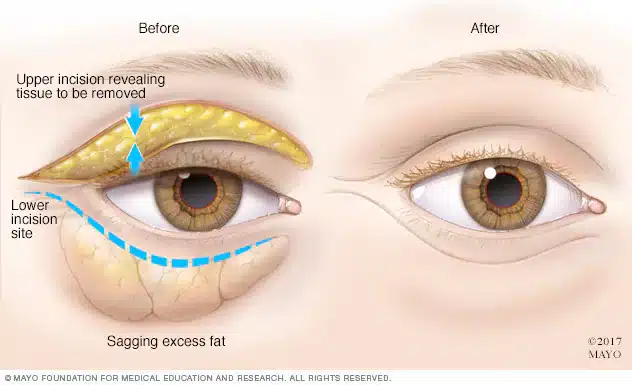
Blepharoplasty is a surgical procedure, often done on an outpatient basis, that removes excess skin, muscle, and fat from the upper and/or lower eyelids to correct sagging, puffiness, and, in some cases, impaired vision. It is performed to achieve a more rested, youthful appearance, with scars typically hidden in natural eyelid creases. Recovery involves bruising and swelling, usually subsiding in 10-14 days.
Key Aspects of Blepharoplasty Surgery
Types:
- Upper Blepharoplasty: Targets sagging skin that can block upper/peripheral vision.
- Lower Blepharoplasty: Focuses on removing or repositioning fat deposits to reduce “bags.”
- Combined: Both upper and lower lids are treated in one session.
Procedure Details:
Surgeons make incisions following the natural lines of the eyelids: in the crease for upper lids, and below the lashes or inside the lid for lower lids, to help hide scarring.
The process takes about 45 minutes to 2 hours.
Benefits:
- Functional: Improves peripheral vision obstructed by drooping skin.
- Cosmetic: Creates a rejuvenated, alert, and younger-looking eye area.
Recovery and Risks:
- Recovery: Initial healing involves swelling and bruising, with most people returning to public activities in 10-14 days. Complete healing may take a few months.
- Risks: Potential, though rare, complications include dry eyes, infection, bleeding, or a pulled-down lower lid.
Candidates:
Individuals with heavy upper lids, sagging skin, or prominent lower lid bags who are in good general health.